
Many sales are lost not because customers say no, but because nobody follows up. Customers get busy, priorities change, emails are forgotten and decisions are postponed. A respectful follow-up process keeps the conversation alive without becoming pushy.
Follow-up is part of good service. It helps customers make decisions when they are ready.
Agree next steps in advance
The easiest follow-up happens when next steps are agreed during the conversation. Before ending a call, ask when the customer expects to decide and when it would be helpful for you to check in. This creates a natural reason to follow up.
Follow up promptly
Send a short follow-up message soon after a conversation or proposal. Summarise the main points, attach any promised information and confirm the next step. Prompt follow-up demonstrates professionalism and keeps momentum.
Add value with each message
Avoid follow-up messages that simply ask, "Have you decided yet?" Instead, provide something useful: a relevant case study, an answer to a question, a helpful article or additional information that supports the decision.
Each message should give the customer a reason to engage.
Use a simple schedule
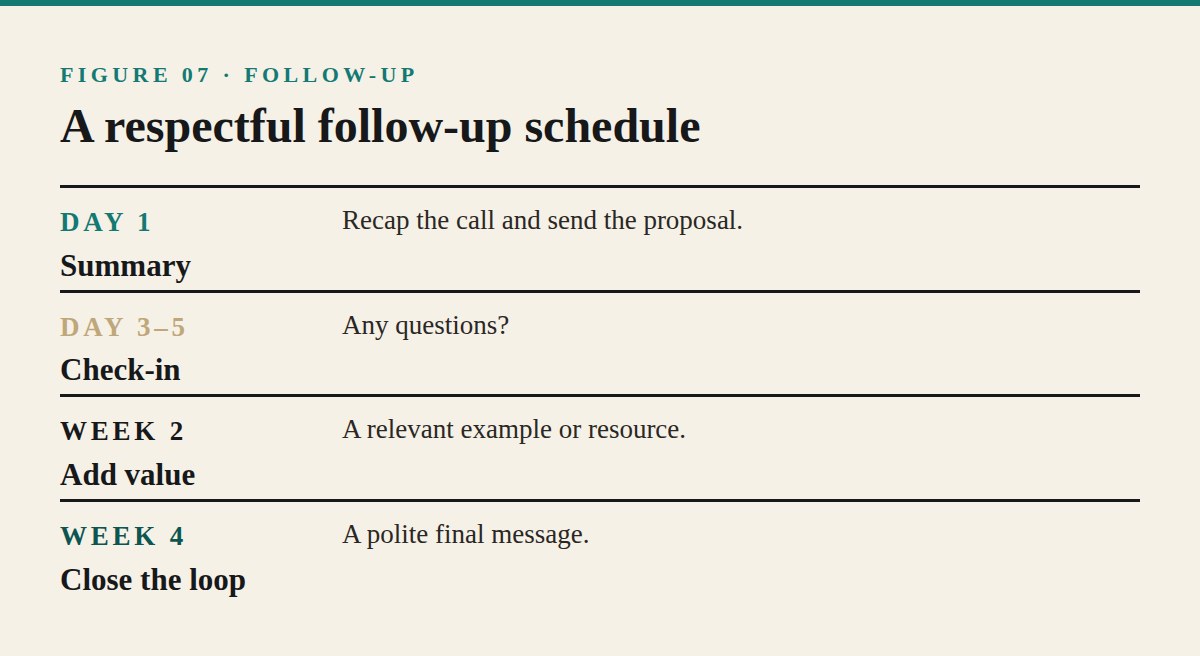
A follow-up schedule helps ensure opportunities are not forgotten. For example:
- Day 1: send a summary and proposal.
- Day 3 to 5: check whether they have questions.
- Week 2: share a relevant example or resource.
- Week 4: ask whether the project remains a priority.
Adjust timing to your customer's decision process.
Keep a simple record of open opportunities, including the last contact date, next step and any notes.
Track every opportunity
Keep a simple record of open opportunities, including the last contact date, next step and any notes. A spreadsheet or customer management tool can prevent opportunities from slipping through the cracks.
Respect the customer's pace
Some decisions take weeks or months. If a customer says the timing is not right, ask when it would be appropriate to reconnect. Note the date and follow up then. Respecting their timeline builds trust.
Know when to close the loop
If several follow-ups receive no response, send a polite final message. For example: "I haven't heard back, so I'll assume this isn't a priority right now. If anything changes, I'd be happy to help." Many customers respond to this kind of message, and it leaves the relationship on good terms.
Stay in touch
Customers who are not ready today may become customers later. Invite them to your newsletter, share useful content occasionally and check in when relevant. Long-term relationships often produce future sales and referrals.
Common mistakes
Businesses often fail to follow up at all, send repetitive "just checking in" emails, follow up too aggressively or lose track of opportunities. Others give up after a single message. A respectful, value-focused and organised follow-up process works best.
An example in practice
A software consultant sent proposals and waited for replies, often hearing nothing. He created a follow-up process: a summary email the same day, a check-in after four days, a relevant case study after two weeks and a polite closing message after a month. He tracked every opportunity in a spreadsheet. Within months, more proposals turned into projects, and several prospects returned later after receiving his closing message.
Sample follow-up messages
A useful second message might read: "Hi Marco, I hope the proposal was clear. One thing I didn't mention on our call: a client in a similar situation reduced their quoting time by half in the first month. Happy to answer any questions." A closing message might read: "I haven't heard back, so I'll assume the timing isn't right. If things change, I'd be glad to help." Both are brief, helpful and free of pressure.