
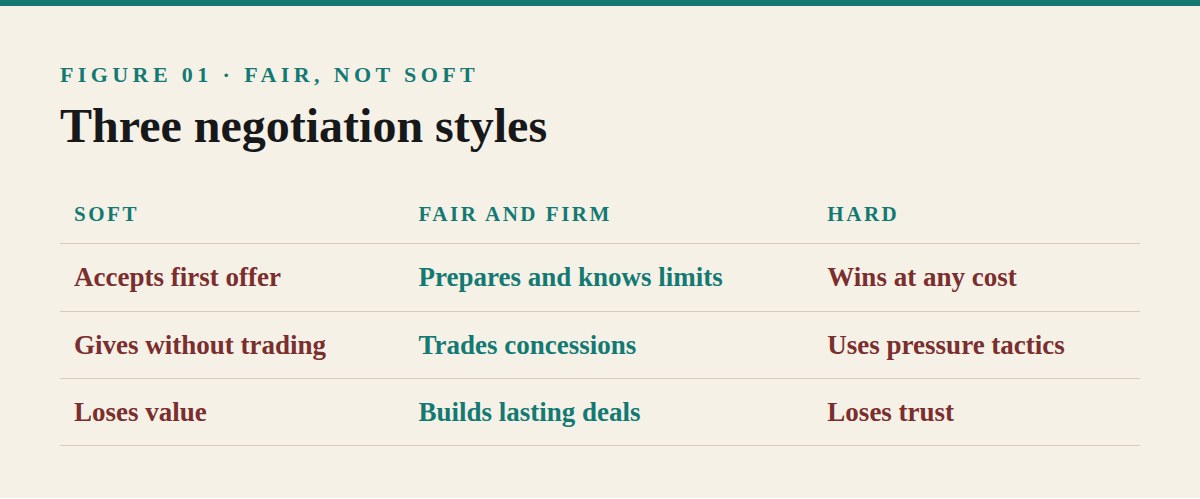
Many people approach negotiation with one of two unhelpful mindsets. Some avoid conflict and accept whatever is offered, giving away value to keep the peace. Others see negotiation as a battle and try to win at the other side's expense. The first approach weakens the business; the second damages relationships and reputation.
Effective negotiation is fair but firm: respectful of the other side, clear about your own interests and focused on agreements that last.
Negotiation is normal
Customers, suppliers and partners expect some discussion about price, terms and conditions. Negotiating is not rude or confrontational. It is a normal part of business relationships, and handled well, it often increases mutual respect.
Aim for agreements that work for both sides
The best agreements meet the important needs of both parties. A supplier forced into an unprofitable price may cut corners or end the relationship. A customer who feels pressured may never return. Agreements that work for both sides are more likely to be honoured and renewed.
Be clear about your value
Founders often negotiate weakly because they doubt the value they provide. Before negotiating, remind yourself of the results you deliver, your experience and the costs involved. Confidence comes from understanding your value, not from aggressive tactics.
Separate the people from the problem
Treat negotiations as a joint problem to solve rather than a personal contest. You can be firm about terms while remaining courteous and respectful towards the person.
Know your limits
Before any negotiation, decide what you will not accept. Clear limits protect you from agreeing to terms you later regret.
You can be firm about terms while remaining courteous and respectful towards the person.
Be honest
Avoid bluffing, misleading statements or false deadlines. Dishonesty may produce short-term gains but damages trust and reputation. In small industries and local markets, reputation travels quickly.
Be willing to walk away
The ability to decline an agreement is one of the strongest positions in negotiation. If terms do not work for your business, saying no politely is better than accepting a bad deal.
Think long term
Most business relationships continue beyond a single transaction. Consider how each agreement affects future cooperation, referrals and reputation.
A practical tool: the negotiation principles card
Write five principles you will follow in every negotiation, for example: prepare in writing, know my limits, listen first, never mislead and be willing to walk away. Keep the card where you can see it before important conversations. Principles written in calm moments help when conversations become tense.
Questions to set the right mindset
Before negotiating, ask: What would a fair agreement look like for both of us? What do I need, and what would be nice to have? What value am I bringing? How do I want this person to feel about working with me afterwards? These questions shift focus from winning to building a good deal.
Common mistakes
Founders often accept the first offer to avoid discomfort, give discounts before being asked, treat negotiations as personal battles or make concessions without receiving anything in return. Others negotiate without clear limits. A fair, prepared and confident approach produces better outcomes and stronger relationships.
An example in practice
A small graphic design studio routinely lowered its prices whenever clients hesitated. After reviewing its costs and results, the founder decided to negotiate differently: explaining the value of each package, offering smaller options instead of discounts and politely declining projects below her minimum price. Revenue per project increased, and clients appeared to respect the studio more.
Negotiation as a skill
Negotiation improves with practice. Each conversation teaches you something about preparation, listening and timing. Review important negotiations afterwards: what went well, what you would change and what you learned about the other side. Over time, negotiations become less stressful and more productive.