
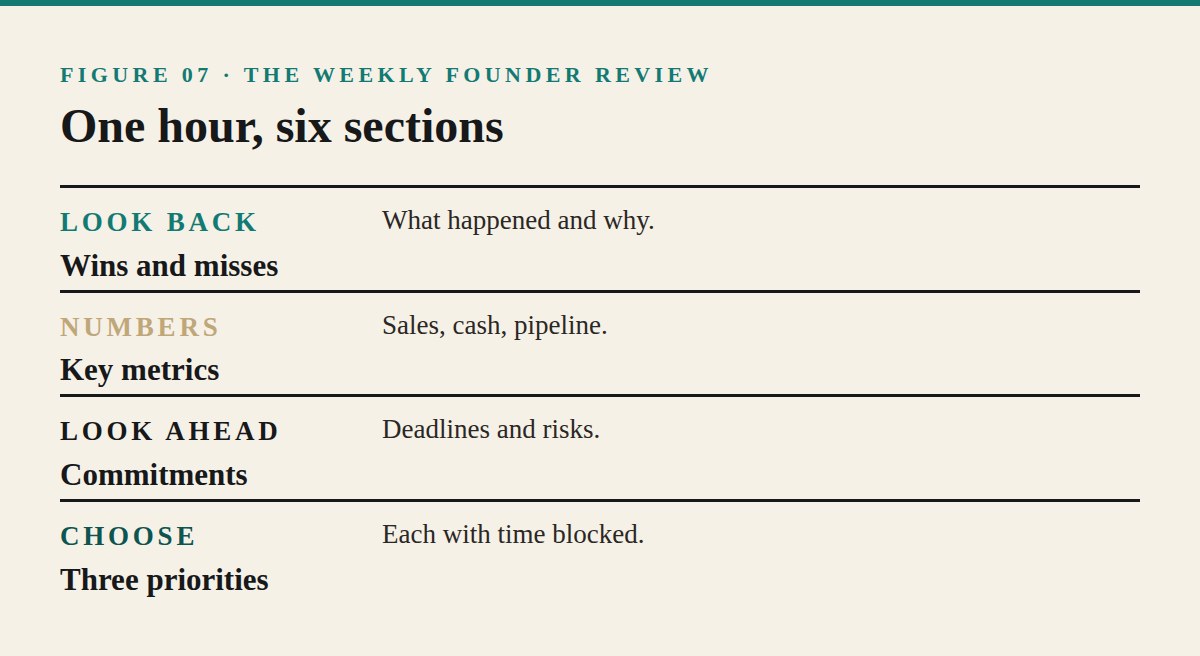
Without regular reflection, weeks blur together. Urgent tasks fill each day, important priorities drift and problems are noticed late. A weekly founder review creates a dedicated time to step back, assess progress and plan the week ahead.
It is one of the simplest and most powerful habits a founder can adopt.
Choose a regular time
Schedule the review at the same time each week, such as Friday afternoon or Monday morning. Protect it as an important appointment.
Review the past week
Begin by reviewing what happened:
- What did you achieve?
- What did not get done, and why?
- What problems or opportunities appeared?
- What did you learn?
Honest reflection helps you understand patterns and improve.
Check key numbers
Review a few important indicators: sales, cash, pipeline, customer feedback, operational measures or progress towards goals. Regular review makes it easier to spot changes early.
Review commitments and deadlines
Look at upcoming deadlines, meetings and commitments. Identify potential conflicts or risks.
Choose priorities for the coming week
Select the three most important outcomes for the next week. These should move the business forward rather than simply maintain current activity. Schedule time for each priority in your calendar.
Plan delegation
Identify tasks that others can handle and prepare clear instructions or handovers. The weekly review is an ideal time to prevent last-minute delegation.
Process notes, unread messages, unfinished tasks and ideas collected during the week.
Clear loose ends
Process notes, unread messages, unfinished tasks and ideas collected during the week. Decide what to do, delegate, schedule or discard.
Reflect on energy and balance
Consider how you felt during the week. Were there signs of exhaustion or stress? Did you protect time for rest and focused work? Adjust next week's plan accordingly.
Keep it short and consistent
A weekly review does not need to be elaborate. Thirty to sixty minutes is usually enough. Consistency matters more than perfection.
A practical tool: the weekly review template
Create a one-page template with six sections: wins, unfinished work, key numbers, upcoming commitments, three priorities for next week and one improvement. Fill it in each week and keep previous reviews in a folder. Over time, the collection shows clear patterns in what helps and hinders your progress.
Questions for the review
Useful questions include: "What was the most valuable thing I did this week?" "What took more time than it should have?" "What am I avoiding?" "What would make next week a success?" "Which task can I hand to someone else?" A few consistent questions keep the review quick and honest.
Common mistakes
Founders often skip the review during busy weeks, review only tasks without considering priorities, choose too many goals or fail to schedule time for important work. Others make the review so complex that it becomes difficult to maintain. A simple, consistent review keeps the business focused.
An example in practice
A small e-commerce founder often felt overwhelmed and reactive. She introduced a forty-minute Friday review: celebrating wins, checking sales and cash, reviewing upcoming deadlines and choosing three priorities for the next week. Within a few months, she reported feeling more in control, important projects progressed steadily and fewer problems surprised her.
Reviewing with a partner
Some founders find it helpful to share their weekly review with a business partner, mentor or peer. A brief conversation adds accountability and fresh perspective. Explaining your priorities aloud often clarifies thinking and reveals assumptions that are worth questioning.
When the week goes badly
Some weeks bring problems, missed goals or exhausting surprises. These are exactly the weeks when the review matters most. Instead of skipping it, use it to understand what happened, decide what to recover first and reset priorities. A short review after a difficult week prevents one bad week from turning into a bad month.