
Growth · 07 of 08
Your First Customers: Practical Marketing for a New Business
Before advertising, there is a simpler path: be useful, be direct and be easy to recommend.
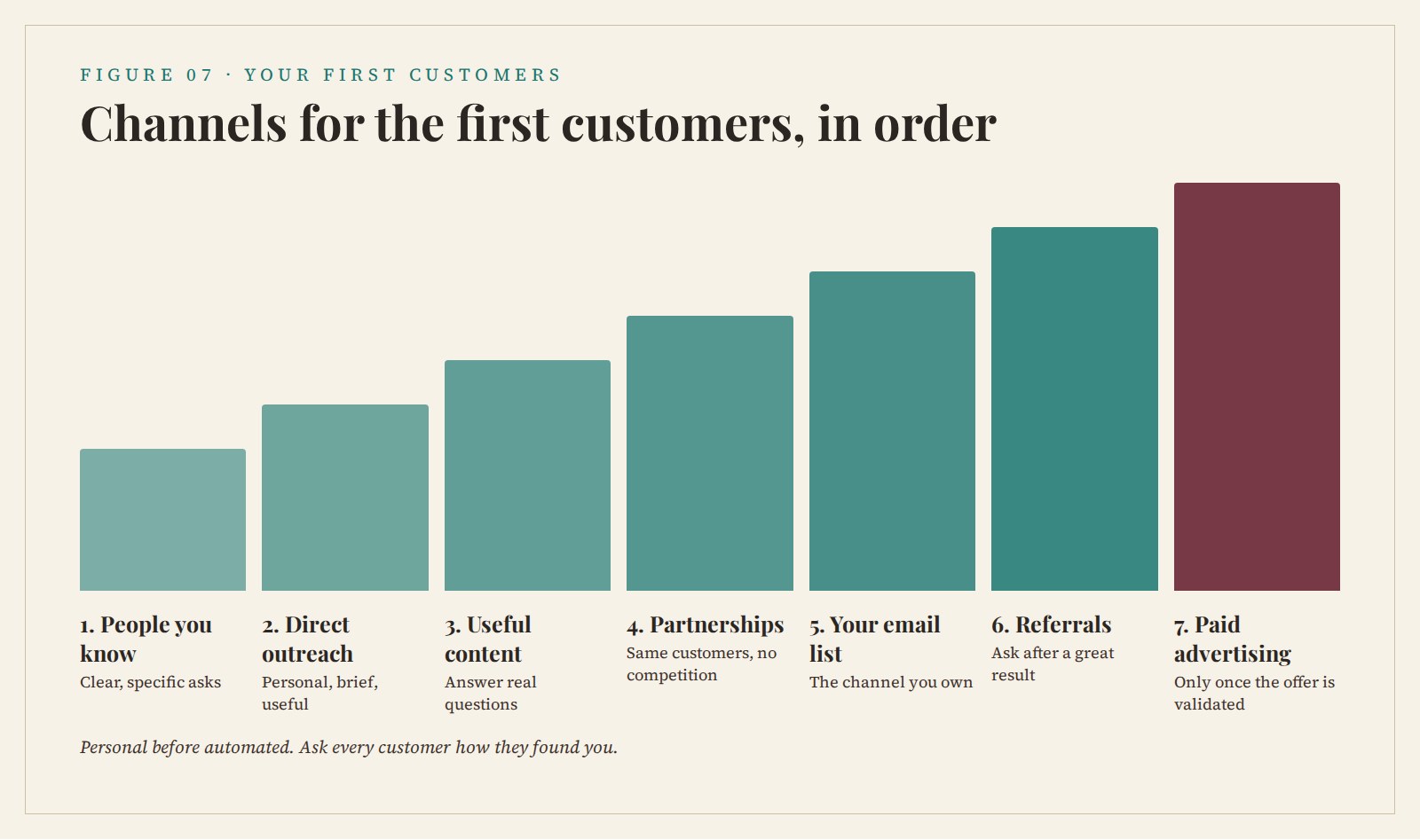
The first customers are the hardest to win. You have no reviews, no case studies and no reputation to lean on. Yet these early customers matter more than any others, because they prove your offer works and teach you how to improve it.
The good news is that winning them rarely requires a large budget. It requires clarity, persistence and a willingness to do things that do not scale.
Start with the people closest to you
Your first customers are often one or two steps away: former colleagues, acquaintances, members of communities you already belong to and people who have mentioned the problem you solve. Tell them clearly what you now offer and who it is for. Ask not only whether they need it, but whether they know someone who does.
Be specific. "I've started a business, let me know if I can help" produces polite silence. "I'm helping small restaurants post consistently on Instagram without spending their evenings on it. Do you know any owners who struggle with that?" gives people something to act on.
Direct outreach, done respectfully
Direct outreach means contacting potential customers personally: a message, an email or a visit. It is uncomfortable for many founders, but it is one of the most reliable ways to win early business.
Good outreach is personal, brief and useful. Show that you understand the recipient's situation, offer something of value and make it easy to reply. A web designer might send a local business a short note pointing out one specific improvement to its booking page, with no obligation. Many will ignore it. Some will reply, and those conversations become customers.
Keep a simple record of who you contacted, when and what happened. Follow up once or twice, politely, and respect anyone who is not interested. Always follow the rules on unsolicited messages in your country.
Organic content
Content means sharing useful information where your customers already spend time: social media, a blog, a newsletter or videos. Its purpose is to demonstrate expertise and build trust before people are ready to buy.
The most effective early content answers real questions your customers ask. A personal trainer might explain how to exercise safely with lower back pain. An accountant might explain which expenses freelancers often forget to claim. Each piece should be practical enough that someone could act on it immediately.
Consistency matters more than volume. One helpful post a week for six months will usually outperform a burst of daily posts that stops after three weeks.
Partnerships
Partnerships connect you with customers who already trust someone else. Look for businesses that serve the same customers without competing with you. A wedding photographer might partner with florists and venues. A bookkeeper might partner with a business lawyer. A dog trainer might partner with local pet shops.
Offer partners something genuinely useful: referrals in return, a resource for their customers or a joint workshop. The best partnerships make both businesses look good.
Email: the channel you own
Social platforms change their rules; your email list belongs to you. From the beginning, invite interested people to join a simple newsletter, perhaps by offering a short guide or checklist related to your service.
Send useful emails regularly, not just announcements and offers. A list of two hundred engaged readers who trust you is far more valuable than thousands of followers who barely notice your posts. Always include an easy way to unsubscribe.
Referrals
Delighted customers are your best marketing. Make referrals easy by asking at the right moment, usually right after you have delivered a great result. Be specific: "If you know another café owner who'd find this useful, I'd be grateful for an introduction."
Some businesses offer a small thank-you for referrals. Whether or not you do, the foundation is the same: work good enough that people want to talk about it.
Track where customers come from
Ask every new customer one simple question: How did you hear about us? Record the answer alongside the sale. After a few months, patterns appear. Perhaps most of your best clients came from partner referrals, while social media brought many enquiries but few sales.
This simple habit tells you where to spend your limited time. Double down on the channels that bring good customers, and stop investing in those that only bring attention.
When to use paid advertising
Paid advertising can accelerate growth, but it magnifies whatever is already true about your offer. If people do not yet understand or want what you sell, ads will spend your money proving it.
Advertise once you have validated your offer: you know who buys, why they buy and roughly how much a customer is worth to you. Start with a small, controlled budget, test one clear message and measure the cost of each customer you win. Scale only what works.
The takeaway
Early marketing is personal before it is automated. This week, write a one-sentence description of who you help and how, send it to ten people who could buy or refer, and publish one piece of genuinely useful content for your target customer.